Over-Roofing vs Tear-Off and Reinstall: The Best Solution for Warehouse Roof Renovation While Operations Continue
Introduction
Renovating the roof of a warehouse that remains operational is both a technical and managerial challenge that demands careful planning. Logistics, storage, and distribution activities must not be disrupted, while the old roof has already shown declining performance such as leaks, corrosion, or frame deflection. Two commonly used methods are over-roofing (installing a new roof over the old roof) and tear-off and reinstall of the old roof (complete demolition before installing a new roof). This article compares the two methods technically, operationally, and economically, as a guide for warehouse owners in making the right decision. PT. Bajaringan Industri Sejahtera, as a specialist in light steel roof construction, presents an analysis based on field experience and applicable national standards.
1. Definition and Basic Concepts of Both Methods
1.1 Understanding Over-Roofing
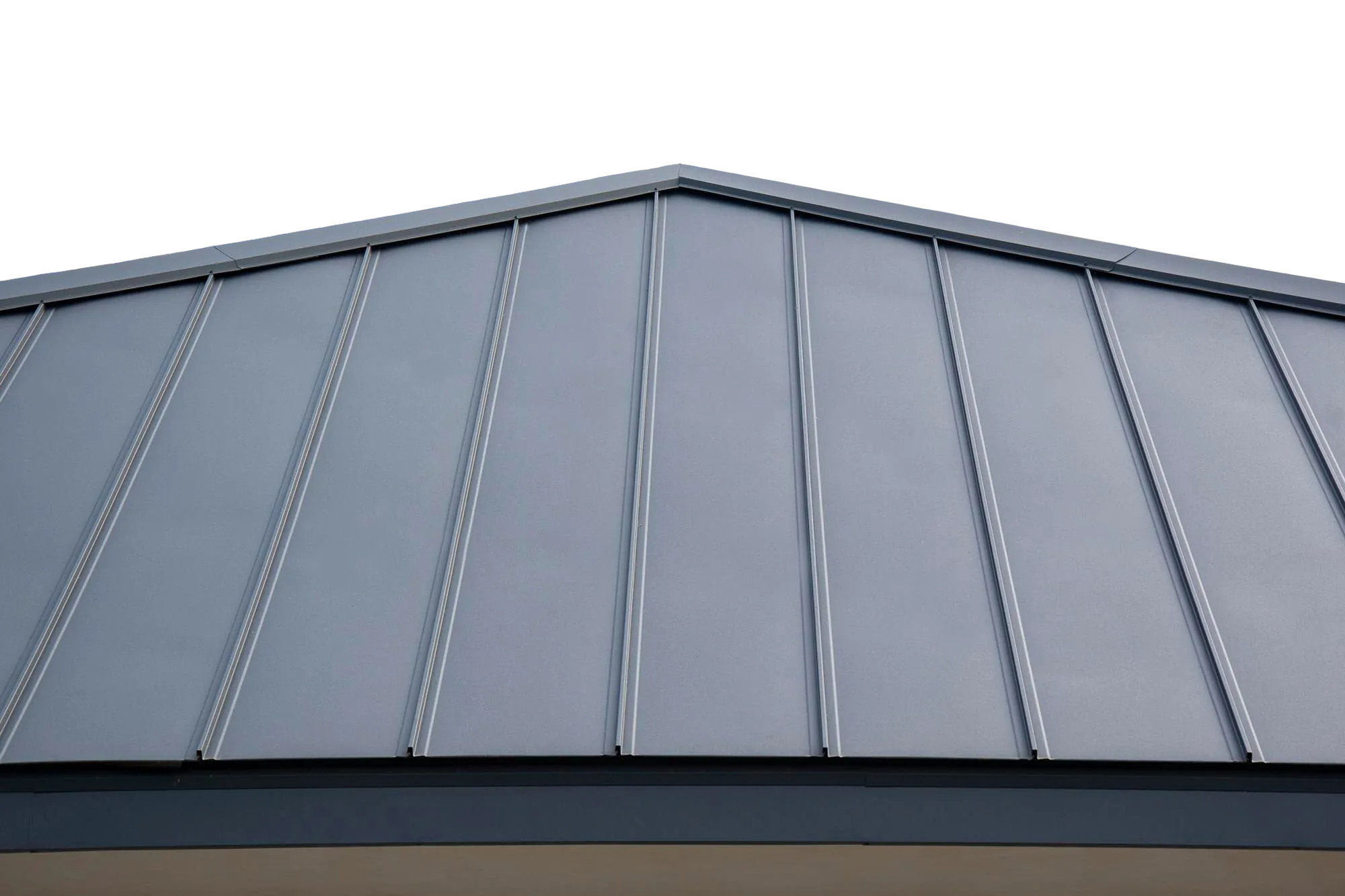
Over-roofing is a roof renovation method by installing a new frame and roof covering on top of the existing roof structure without demolishing the old roof. The old roof continues to function as a temporary protective layer during the construction process, so the warehouse remains protected from rain and heat. This method generally uses light steel as an additional frame because it is lightweight and has a high strength-to-weight ratio. According to SNI 1729:2020, light steel profiles with G550 quality and a zinc-aluminium (AZ) coating of at least 150 g/m² are recommended for roof structures in industrial areas with high humidity.
1.2 Understanding Tear-Off and Reinstall
Tear-off and reinstall is a renovation method that involves demolishing the entire old roof — both covering and frame — before installing a new roof. This method provides an opportunity to inspect and repair supporting structures such as columns, beams, and foundations. However, this process exposes the warehouse interior to weather during the demolition period, thus requiring mitigation measures such as temporary tarps or strict scheduling.
1.3 Fundamental Differences
The main difference lies in the level of disruption to the structure, space, and warehouse operations. Over-roofing retains the old structure as a subsystem, while tear-off and reinstall replaces it entirely. Over-roofing minimizes interior exposure, while tear-off and reinstall provides design freedom and comprehensive structural repair.
2. Time and Execution Speed Aspects
2.1 Over-Roofing is Faster
Over-roofing is generally 20–40% faster compared to tear-off and reinstall because there is no demolition process, debris cleaning, and disposal of old material. For a warehouse with an area of 5,000 m², over-roofing can be completed in 4–6 weeks, while tear-off and reinstall requires 7–10 weeks depending on the structure's condition.
2.2 Tear-Off and Reinstall Requires More Time
Tear-off and reinstall requires additional stages: covering demolition, frame demolition, cleaning, structural inspection, repair, and new installation. Each stage has the potential to cause delays due to weather or unexpected structural findings.
2.3 Impact on Operational Schedule
Over-roofing allows parallel work — the warehouse remains operational below while workers install the new roof above. Tear-off and reinstall often requires closing certain areas or the entire warehouse, which directly impacts logistics throughput.
3. Impact on Warehouse Operations
3.1 Over-Roofing: Operations Continue
Because work is done from above, the warehouse can remain fully or largely operational. Dust and noise are minimal, and there is no risk of sudden leaks because the old roof still functions as a protective layer.
3.2 Tear-Off and Reinstall: Risk of Operational Disruption
Tear-off and reinstall has the potential to halt operations in certain areas, increasing the risk of leaks during the demolition process, and causing dust and noise disturbances. Items sensitive to dust or moisture must be moved or protected.
3.3 Need for Reorganization
Both methods require reorganizing the layout of goods and security systems during renovation. However, tear-off and reinstall usually requires more extensive arrangements due to greater interior exposure.
4. Structural Aspects and Additional Load
4.1 Additional Load in Over-Roofing
Over-roofing adds load to the existing structure. The additional load from the light steel frame and metal covering generally ranges from 10–15 kg/m², which can still be tolerated by many modern warehouse structures. However, analysis of frame and foundation strength must be carried out by a structural engineer before execution. PT. Bajaringan Industri Sejahtera always conducts a structural load survey using analysis software such as SAP2000 or ETABS to ensure safety.
4.2 Structural Repair in Tear-Off and Reinstall
Tear-off and reinstall allows repair or strengthening of the old structure at the same time, including replacement of corroded columns, repair of connections, and foundation improvement. This is an advantage if the structure already shows signs of declining performance.
4.3 Hidden Corrosion Risk
In over-roofing, the old roof that is left in place has the potential to experience further corrosion or hidden damage that is not detected. Therefore, a thorough inspection and anti-corrosion treatment of the old roof is highly recommended.
5. Investment Cost and Long-Term Efficiency
5.1 Initial Cost of Over-Roofing
Over-roofing has a lower initial cost because there are no demolition and disposal costs. However, costs must be allocated for structural strengthening if needed. The estimated cost of over-roofing for a 5,000 m² warehouse ranges from IDR 350,000–500,000 per m², depending on material specifications.
5.2 Initial Cost of Tear-Off and Reinstall
Tear-off and reinstall has a higher initial cost because it involves demolition, disposal, and new installation. The estimated cost ranges from IDR 500,000–750,000 per m². However, the result is a completely new roof free from old problems.
5.3 Service Life and Energy Savings
Over-roofing with additional insulation can improve the warehouse's thermal performance, reducing cooling load by up to 20–30%. The service life of high-quality light steel roofs reaches 25–30 years. Tear-off and reinstall provides a similar service life, but without the additional insulation benefit unless specifically designed.
6. Safety and Environmental Aspects
6.1 Over-Roofing: Work at Height Risk
Over-roofing involves work at height without demolition, so the risk of falling material is lower. Construction waste is also less because no old material is discarded.
6.2 Tear-Off and Reinstall: Risk of Falling Material and Dust
Tear-off and reinstall has risks of falling material, dust exposure, and hazardous waste (if any) that must be managed according to regulations. Compliance with OHS standards and environmental permits in industrial areas is mandatory.
6.3 Compliance with Standards
Both methods must comply with Permen PUPR No. 05/PRT/M/2016 on Technical Guidelines for Building Construction, as well as OHS standards from the Ministry of Manpower. PT. Bajaringan Industri Sejahtera implements a certified OHS management system and ensures all workers have work-at-height competency.
7. Recommendations for Method Selection Based on Warehouse Conditions
7.1 Over-Roofing is Suitable for:
- Warehouses with structures that are still strong and do not show excessive deflection.
- Dense operations that cannot be disrupted.
- Short renovation time and limited budget.
- Desire to improve thermal insulation without demolishing the old roof.
7.2 Tear-Off and Reinstall is Recommended for:
- Old roof is already severely damaged, massive corrosion, or structural deflection.
- Structure requires total repair or increased load capacity.
- Desire for maximum thermal performance improvement with a new design.
- Local regulations require total replacement.
7.3 Need for Expert Survey and Analysis
Before deciding, a survey and analysis by experts such as PT. Bajaringan Industri Sejahtera is highly necessary. The survey includes visual inspection, deflection measurement, material thickness testing, and structural load analysis. With this data, method recommendations can be tailored to the specific conditions of the warehouse.
Conclusion
The choice between over-roofing and tear-off and reinstall of the old roof depends greatly on the structural condition, warehouse operational level, budget, and long-term targets. Over-roofing excels in speed and minimal operational disruption, while tear-off and reinstall provides more comprehensive results and is safe from old roof problems. PT. Bajaringan Industri Sejahtera recommends a thorough technical survey so that the chosen solution is truly efficient and sustainable. With more than a decade of experience in light steel roof construction, PT. Bajaringan Industri Sejahtera is ready to be a trusted partner in your warehouse renovation.
Reference List
- Standar Nasional Indonesia (SNI) 1729:2020 on Light Steel for Building Structures.
- Peraturan Menteri Pekerjaan Umum dan Perumahan Rakyat No. 05/PRT/M/2016 on Technical Guidelines for Building Construction.
- Metal Roofing Alliance. (2022). Over-Roofing vs. Tear-Off: Best Practices for Commercial Buildings.
- National Roofing Contractors Association (NRCA). (2021). Roofing Manual: Commercial Buildings.
- Internal case study of PT. Bajaringan Industri Sejahtera (2023) on logistics warehouse renovation in Bekasi Industrial Area.
Dapatkan Update
Artikel terbaru, insight harga material, dan studi kasus proyek langsung ke WhatsApp Anda.
Artikel Terkait
Lihat Lainnya
How Long is the Warranty for Warehouse Roofing Materials and Installation Services at PT. Bajaringan Industri Sejahtera?
How Long is the Warranty for Warehouse Roofing Materials and Installation Services at PT. Bajaringan Industri Sejahtera?…
The Importance of Roof Audits Using Drone Technology and Thermal Inspection to Detect Leaks and Structural Damage Before Major Losses Occur
Introduction The roof is a vital building component that often goes unnoticed until damage becomes severe. In fact, the …
Comparison of Klip-Lok vs Trimdek Roof Profiles for Warehouses and Factories: Advantages of the Concealed Clip System, Durability, Price, and Usage Recommendations
Introduction Roofing is a crucial component in the construction of warehouses and factories. Its function is not merely …
NEED A COST ESTIMATE FOR YOUR PROJECT?
Our surveyors come to the location for free written offers within 24 hours.