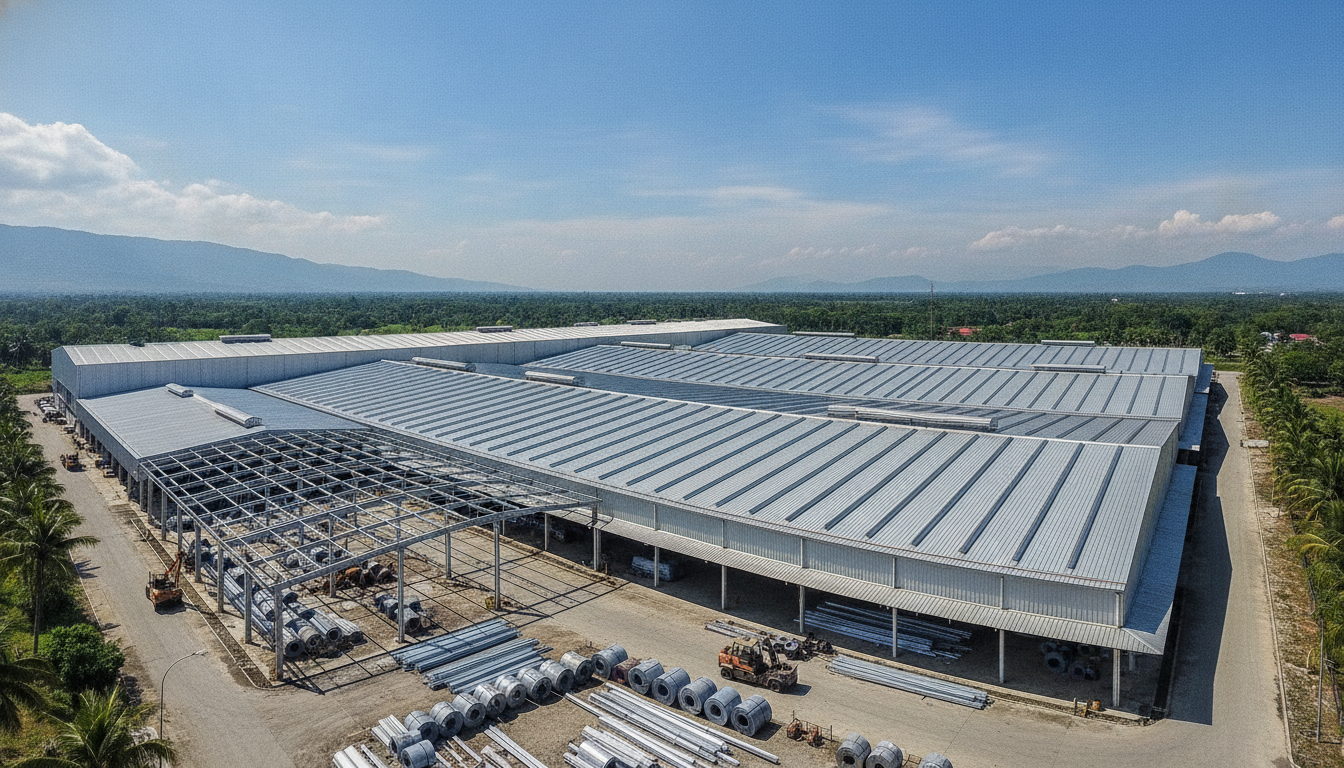
Sir, Is It Better to Use Spandek or Metal Roof Tiles for My New Warehouse Roof?
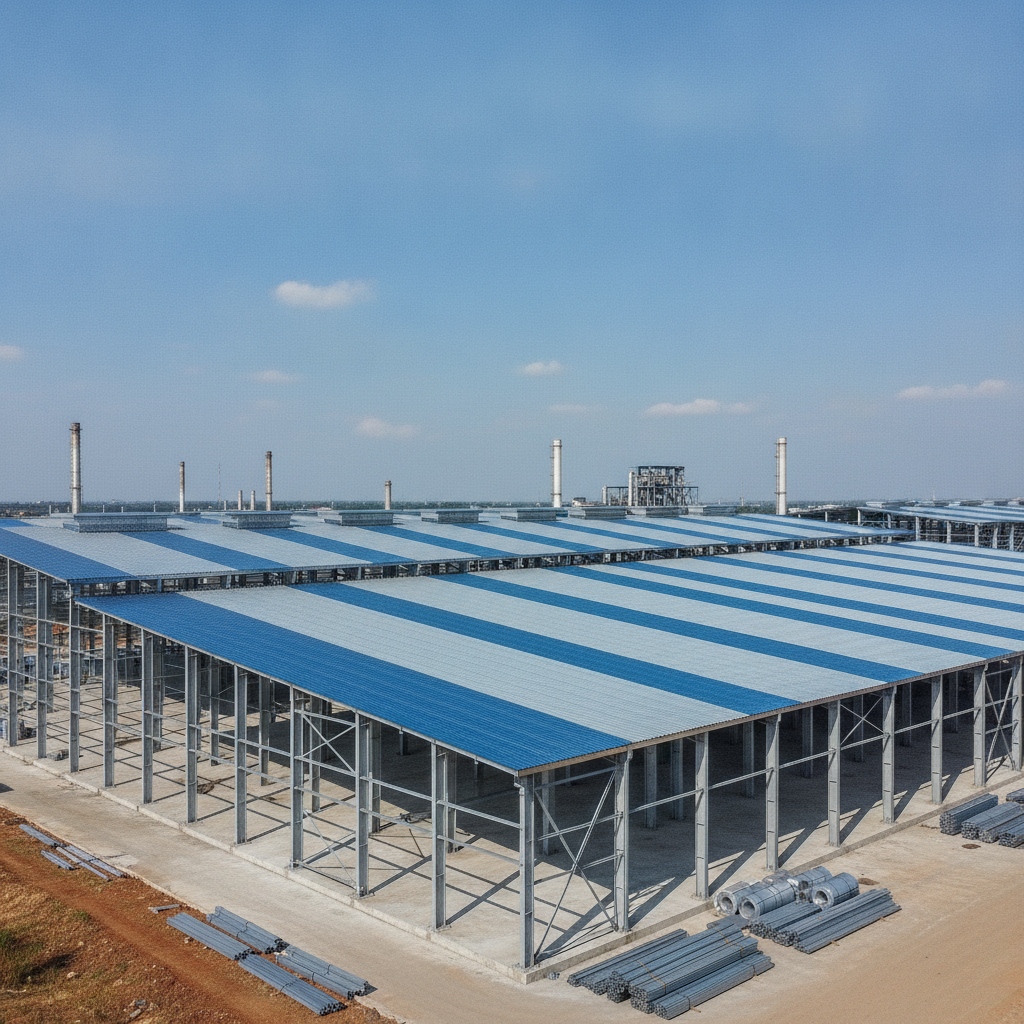
The question of choosing between spandek and metal roof tiles for a warehouse roof is one of the most frequently asked by customers to the team at PT. Bajaringan Industri Sejahtera. Both types of roofing are equally popular as light steel roof coverings, yet they have different characteristics, advantages, and limitations. As a company experienced in light steel roof construction, we understand that this decision will affect the performance, cost, and comfort of your warehouse in the long term. This article will objectively and technically compare the two so you can make the decision best suited to your new warehouse's needs.
Understanding the Basic Characteristics of Spandek and Metal Roof Tiles
Spandek (corrugated zinc roofing) is made from light steel coated with zincalume or galvalume with a corrugated profile. It is generally available in thicknesses from 0.25 mm to 0.50 mm, with effective widths varying between 750 mm and 1,000 mm depending on the profile. The main advantage of spandek is its ability to be installed continuously—sheet lengths can be tailored to requirements up to a dozen meters or more—minimizing joints and potential leaks. The zincalume layer (55% aluminum, 43.4% zinc, 1.6% silicon) provides good corrosion protection, while some premium products feature polyester or PVDF color coatings for added aesthetics and durability.
Metal roof tiles are also made from coated light steel, but with a profile resembling clay or ceramic tiles. They are available in various models—flat, modular, and specific motifs—with steel thickness generally from 0.25 mm to 0.40 mm. Unlike spandek, metal roof tiles are installed modularly with an interlocking system, where each unit covers the one below. This system creates a more architectural appearance but produces more joint points that must be carefully installed.
Comparison in Terms of Price and Cost Efficiency
In terms of material price, spandek is generally more economical per square meter than metal roof tiles. The price difference can reach 20–40% depending on brand, thickness, and protective coating. Metal roof tiles are more expensive due to a more complex production process (profile forming, modular cutting, and finishing) and the need for additional accessories such as ridge, flashing, and special screws.
In terms of installation cost, spandek is clearly superior. Long sheets with minimal joints make installation much faster—a major advantage for large warehouses. This time saving translates directly into labor cost savings. Metal roof tiles require longer installation time due to their modular system, where each unit must be installed and locked one by one, resulting in higher labor costs per square meter.
In terms of frame efficiency, lightweight spandek (ranging 3–5 kg/m² depending on thickness) allows for more efficient use of light steel frames with wider truss and purlin spacing. Metal roof tiles are also lightweight (around 4–6 kg/m²), but because of their modular system, the need for purlins and additional accessories—along with higher purlin density—must be factored into the frame design. The engineering team at PT. Bajaringan Industri Sejahtera always calculates roof loads carefully so that the light steel frame structure used is truly efficient and safe.
Weather Resistance and Durability
Leak resistance is a crucial factor for warehouses storing goods. Spandek with minimal joints reduces the risk of leaks, provided installation and overlapping are done correctly—generally at least one corrugation for standard slopes. Metal roof tiles have many joint points, so installation quality is key; a good interlocking system combined with screws in the right positions will minimize this risk.
Wind resistance also needs attention, especially in open locations. Spandek with proper fasteners (screws) and standard spacing has good wind resistance. Metal roof tiles with an interlocking system also perform well, but fasteners must meet standards and no units should be loosely installed. For areas with strong winds, our team will recommend tighter screw spacing and fastening methods.
Corrosion resistance depends heavily on the quality of the protective layer. Both spandek and metal roof tiles using zincalume or galvalume with quality coatings will last long, even in industrial environments. Be sure to choose products with coating standards suited to your warehouse environment—for example, coastal areas or industrial zones with high pollution require extra protective layers.
Comfort Aspects: Noise, Heat, and Aesthetics
Noise level during rain is an important consideration for warehouses. Spandek tends to be noisier during heavy rain, especially without insulation, because wide continuous metal sheets transmit sound vibrations. Metal roof tiles dampen sound slightly better due to their profiles and joints breaking up the flat surface, though insulation is still worth considering for optimal comfort.
Heat insulation is a major concern in tropical climates. Both are metal, so additional insulation—foil, glasswool, or bubble foil—is needed to maintain warehouse interior temperatures. Metal roof tiles with air cavities beneath the profile can slightly aid circulation, but insulation is still recommended for both roof types. PT. Bajaringan Industri Sejahtera provides insulation packages that can be tailored to your warehouse's thermal needs.
Aesthetics is a clear differentiator. Spandek provides a clean, modern industrial look—suitable for warehouses focused on functionality. Metal roof tiles provide a more "architectural" appearance resembling conventional tiles, suitable if your warehouse is also part of the corporate image you want to project.
Ease of Maintenance and Repair
Routine maintenance for both is relatively low; regular cleaning of dirt and leaves, especially in gutter and valley areas, is sufficient. Periodic inspection of bolts and fasteners is still necessary to ensure nothing loosens due to vibration or thermal expansion.
Damage repair is easier with spandek because it can be replaced sheet by sheet if local damage occurs. Metal roof tiles allow replacement per modular unit, but model and color availability must be considered so repairs remain visually consistent. Be sure to choose products with complete accessories (flashing, ridge, screw) that are readily available on the market so long-term maintenance is not hindered.
Recommendations Based on Warehouse Scale and Function
As a practical guide, here are recommendations from the PT. Bajaringan Industri Sejahtera team:
- Large-scale warehouses with efficient budgets: Spandek is an economical and fast-to-install choice, ideal for warehouses prioritizing functionality and cost efficiency.
- Warehouses with aesthetic and building appearance considerations: Metal roof tiles can be considered, especially if the warehouse is part of a publicly visible facility.
- Warehouses in high-rainfall environments: Consider spandek with proper slope and overlapping, or metal roof tiles with a high-quality interlocking system and careful installation.
- Consult with the PT. Bajaringan Industri Sejahtera team: Tailor your choice to the frame design, load, and specific location needs. Our team will analyze loads, roof slope, and environmental conditions to provide the most appropriate recommendation.
Conclusion
There is no single "better" answer between spandek and metal roof tiles, as both have their own advantages depending on your warehouse's needs, budget, and location conditions. Spandek excels in cost efficiency and installation speed, while metal roof tiles offer a more aesthetic appearance with a modular system. As a light steel roofing specialist, PT. Bajaringan Industri Sejahtera is ready to help you analyze your specific needs and recommend the most appropriate light steel roofing solution for your new warehouse—from structural planning and material selection to installation by experienced professionals.
References
- Indonesian National Standards (SNI) related to light steel and roof coverings.
- Product catalogs and technical specifications of PT. Bajaringan Industri Sejahtera.
- Installation guides for spandek and metal roof tiles from light steel material manufacturers.
- Technical articles on metal roof covering comparisons (light steel construction industry sources).
Dapatkan Update
Artikel terbaru, insight harga material, dan studi kasus proyek langsung ke WhatsApp Anda.
Artikel Terkait
Lihat Lainnya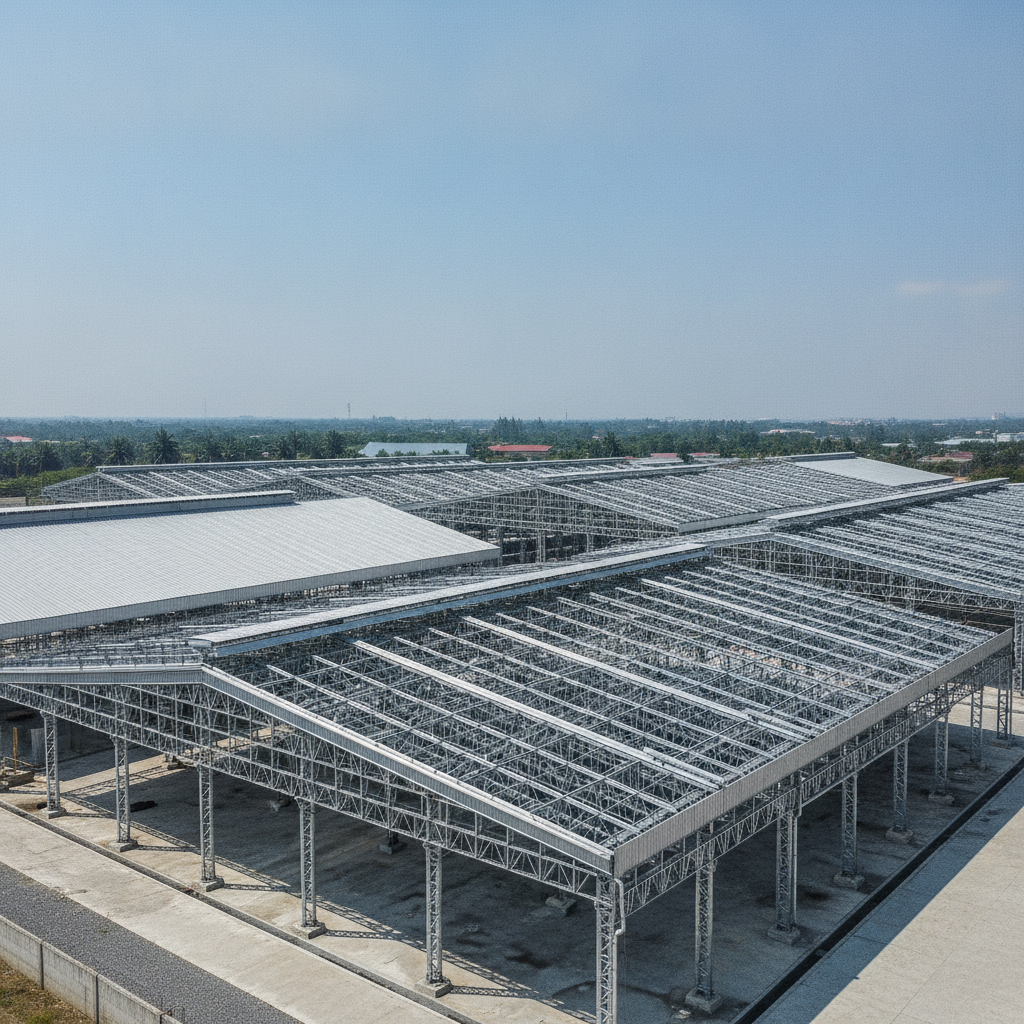
How to Ensure the Light Steel Roofing Contractor You Choose Is Truly Experienced and Not a Fraud?
How to Ensure the Light Steel Roofing Contractor You Choose Is Truly Experienced and Not a Fraud? Introduction Choosing…
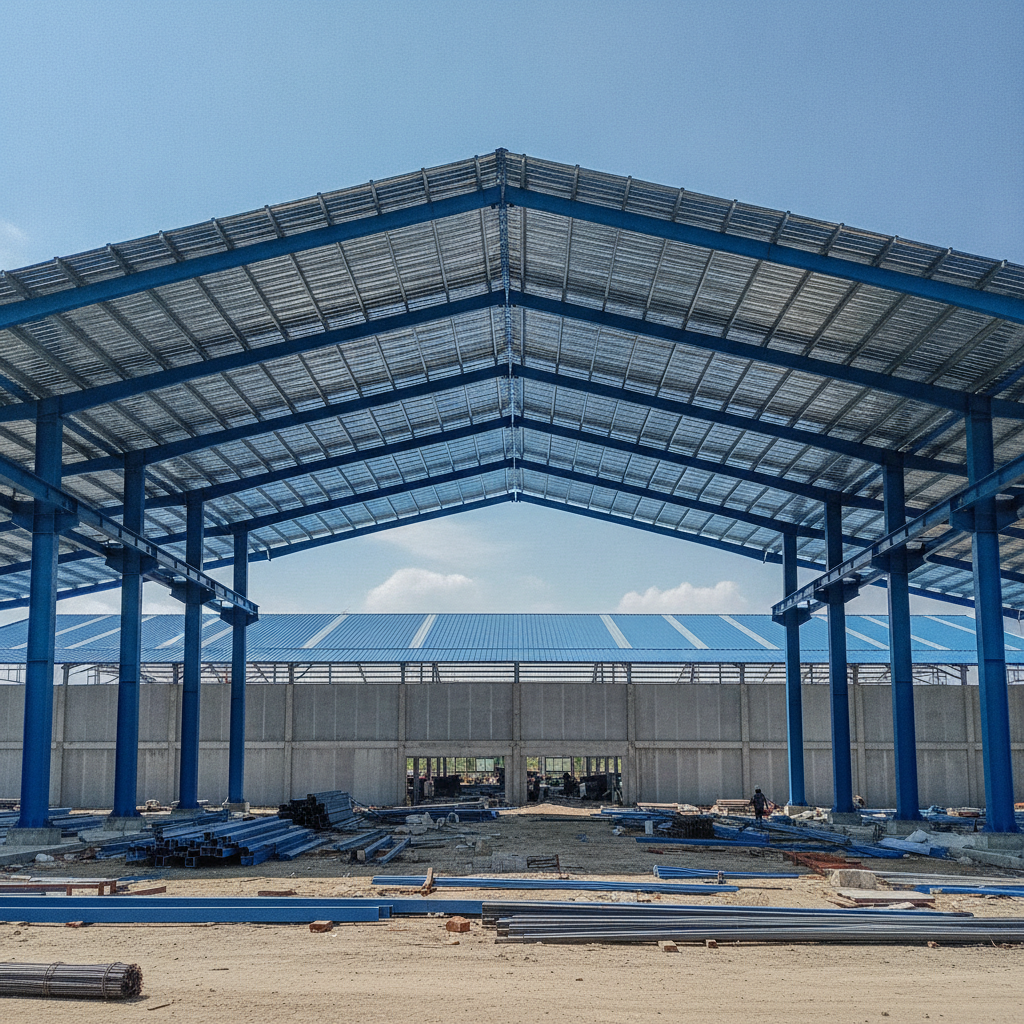
Which Is Better: Light Steel Roofing or Conventional Concrete Roof for Your New Warehouse?
Which Is Better: Light Steel Roofing or Conventional Concrete Roof for Your New Warehouse? Introduction Choosing the ri…
How Much Light Steel and Spandek Are Needed for a 1,500 m² Warehouse? A Complete Calculation Guide
Berapa Kebutuhan Baja Ringan dan Spandek untuk Gudang Seluas 1.500 m²? Panduan Lengkap Menghitungnya\n\n Pendahuluan\n\n…
NEED A COST ESTIMATE FOR YOUR PROJECT?
Our surveyors come to the location for free written offers within 24 hours.