Introduction
Light steel roofs are a vital component of warehouse and factory buildings as they function to protect assets, products, and operational activities from extreme weather. In Indonesia, with high rainfall that can reach 3,000 mm per year in some areas and humidity ranging from 70–90%, light steel roofs face significant environmental pressure. Without proper maintenance, light steel roofs are prone to leaks and corrosion that can disrupt productivity and increase repair costs drastically.
PT. Bajaringan Industri Sejahtera as a specialist in the supply and maintenance of light steel roofs for industrial buildings has over a decade of experience in handling various challenges of warehouse and factory roofs throughout Indonesia. This article presents a complete guide to light steel roof maintenance to prevent leaks, from regular inspections to effective corrosion handling.
A. The Importance of Light Steel Roof Maintenance in Warehouses and Factories
Impact of Leaks on Operations
Leaks in warehouse and factory roofs are not just an aesthetic problem. Their impact is very broad and can significantly harm the business:
- Damage to goods and products: A single drop of water falling consistently on the same spot can damage stock, raw materials, or finished products. For warehouses storing electronic materials, textiles, or food, leaks can cause losses of up to hundreds of millions of rupiah.
- Disruption of production processes: Machinery and production equipment exposed to water can experience short circuits, rust on precision components, and permanent damage. Production downtime due to leaks can reach dozens of hours per incident.
- Occupational safety risks: Wet floors increase the risk of workplace accidents, while water pooling around electrical installations creates electric shock hazards.
Corrosion Risk that Shortens Service Life
Light steel has a protective layer (generally zinc-aluminium or AZ coating) that protects the steel from corrosion. However, this layer has a durability limit that depends on coating thickness and environmental conditions. Based on technical data, light steel with AZ150 coating has a corrosion resistance of about 20–25 years in normal environments, but can drop to 5–10 years in aggressive environments such as coastal areas or chemical industrial zones.
The Link Between Routine Maintenance and Cost Efficiency
An internal study by PT. Bajaringan Industri Sejahtera (2020–2024) shows that emergency repair costs due to untreated leaks can reach 5–10 times the cost of routine preventive maintenance. Investment in a structured maintenance program has proven to provide significant long-term savings.
Safety Standards and Regulatory Compliance
The Minister of Public Works and Public Housing Regulation on Guidelines for Building Maintenance requires every industrial building owner to perform regular maintenance, including on roof components. Compliance with this regulation not only protects building owners from sanctions but also ensures the safety of all workers.
B. Schedule and Procedures for Regular Inspections
Regular inspection is the foundation of any effective roof maintenance program. PT. Bajaringan Industri Sejahtera recommends the following layered inspection schedule:
1. Routine Monthly Inspection
Monthly inspection is visual and can be performed by the internal maintenance team with proper guidance:
- Visual inspection from inside the building: Identify water drips, damp spots on the frame, or discoloration on the ceiling.
- Water pooling inspection: Pools that persist more than 48 hours after rain indicate drainage problems or roof slope issues.
- Debris and dirt inspection: Accumulation of leaves, bird nests, or other debris that can obstruct water flow.
- Gutter and downpipe inspection: Ensure smooth water flow and no blockages.
2. Seasonal Inspection (Before Rainy and Dry Seasons)
Seasonal inspection is carried out at least twice a year with more detailed coverage:
- Checking joints between sheets: Inspect the condition of sealant, overlap, and flashing. Sealant that has hardened or cracked must be replaced immediately.
- Checking self-drilling screws: Inspect the tightness and condition of screw heads. Loose screws must be tightened, while rusted ones must be replaced.
- Checking flashing and ridge cap: Ensure there are no gaps or shifts due to thermal expansion.
- Checking water paths: Ensure water flows smoothly to the gutter without obstruction.
3. Comprehensive Annual Inspection
Annual inspection involves a deeper structural examination and should be performed by certified technicians:
- Frame structure evaluation: Check bolt tightness, connector condition, and signs of deformation.
- Protective layer evaluation: Measure the remaining coating thickness using a coating thickness gauge.
- Gutter and drainage system evaluation: Check the condition of gutters, joints, and slope.
- Roof ventilation evaluation: Ensure ventilation works optimally to reduce humidity under the roof.
4. Inspection Checklist
The following is a checklist of vulnerable points that must be inspected:
| No | Inspection Point | Frequency | Method |
|---|---|---|---|
| 1 | Overlap joints | Monthly | Visual |
| 2 | Screws and fasteners | Monthly | Visual + touch |
| 3 | Sealant and flashing | Seasonal | Visual + physical |
| 4 | Gutters and downpipes | Monthly | Visual + water flow |
| 5 | Area around ventilation | Seasonal | Visual |
| 6 | Frame structure | Annual | Visual + measuring tools |
| 7 | Coating layer | Annual | Coating thickness gauge |
| 8 | Roof slope | Annual | Digital level |
5. Documentation of Inspection Results
Every inspection must be documented systematically, including:
- Date and time of inspection
- Name and qualifications of inspector
- Findings and specific location (with photos)
- Severity level (minor, moderate, major)
- Recommended actions and deadlines
This documentation becomes a valuable database for monitoring damage trends and planning maintenance budgets.
C. Identifying Common Causes of Leaks
Understanding the causes of leaks is key to proper handling. The following are the most common causes found by PT. Bajaringan Industri Sejahtera in the field:
1. Joints Between Sheets Not Tight
Sealant that dries, cracks, or detaches due to UV exposure and temperature fluctuations is a major cause of leaks. Butyl or silicone sealant has a service life of 5–10 years, after which it must be replaced.
2. Problematic Self-Drilling Screws
Screws that loosen due to vibration, detach due to over-torque during installation, or rust due to damaged coating become significant water entry paths. Every problematic screw must be addressed immediately.
3. Accumulation of Dirt and Moss
Leaves, twigs, and moss that accumulate obstruct water flow and retain moisture on the roof surface. This condition accelerates corrosion and creates new leak paths.
4. Damage Due to Extreme Weather
Strong winds can lift roof sheets, hail can dent surfaces, and falling objects can puncture the roof. Post-extreme weather inspection is very important.
5. Initial Installation Errors
Roof slope that is too shallow (less than 5 degrees for metal roofs), insufficient overlap, or improper flashing become structural causes of leaks that are difficult to repair without dismantling.
D. Preventive Steps to Prevent Leaks
1. Routine Cleaning of Roof Surface and Gutters
Cleaning at least every 3 months, or more frequently in areas with many trees. Use a soft brush and clean water, avoid high pressure that can damage the coating.
2. Regular Replacement of Sealant and Flashing
Sealant must be inspected every 6 months and replaced every 5–7 years. Use polyurethane or silicone-based sealant that is UV resistant and highly elastic.
3. Tightening or Replacing Screws
Use replacement screws with identical or better specifications. Ensure the use of EPDM washers that are still elastic to prevent leaks around screws.
4. Application of Anti-Water and Anti-UV Coating
Application of additional protective coating can significantly extend roof life. PT. Bajaringan Industri Sejahtera provides coating application services with warranties of up to 10 years.
5. Immediate Repair of Small Leak Points
The principle of "the sooner the better" applies strongly. Small leaks handled within 1x24 hours can be prevented from becoming major damage requiring repair costs 10 times higher.
E. Corrosion Handling and Prevention
1. Identifying Types of Corrosion
- Uniform corrosion: Occurs evenly on the metal surface, generally due to moisture exposure.
- Galvanic corrosion: Occurs when two different metals come into contact in an electrolyte environment. On light steel roofs, this can happen if screws of different materials are used.
- Chemical contact corrosion: Common in chemical industrial areas, where acid or base vapors accelerate coating degradation.
2. Cleaning Rusty Areas
Use a wire brush or special chemical remover to remove rust. Ensure the cleaned area is completely dry before applying protection.
3. Application of Anti-Corrosion Paint
- Zinc-rich primer: Provides cathodic protection to the steel.
- Protective top coat: Provides additional protection against UV and moisture.
- Apply at least 2 coats with a dry thickness of 60–80 microns per coat.
4. Replacement of Severely Corroded Components
If corrosion has reached a level where structural integrity is compromised (penetration of more than 50% of material thickness), component replacement is the only safe solution.
5. Environmental Control
- Ensure roof ventilation works optimally to reduce humidity under the roof.
- Avoid storing corrosive chemicals near the roof structure.
- Consider using dehumidifiers in high-humidity warehouse areas.
F. The Role of Experts and Professional Services
The Importance of Inspection by Certified Technicians
Inspection by certified technicians provides quality and safety assurance. Trained technicians can identify problems invisible to the untrained eye, such as corrosion under the coating layer or hidden structural weaknesses.
Regular Maintenance Services from PT. Bajaringan Industri Sejahtera
PT. Bajaringan Industri Sejahtera offers comprehensive regular maintenance packages:
- Basic Package: Monthly inspection + digital reports
- Standard Package: Monthly inspection + preventive maintenance + 24-hour response priority
- Premium Package: All Standard services + comprehensive annual inspection + coating application + extended warranty
Warranty and After-Sales Support
Every product and service of PT. Bajaringan Industri Sejahtera is protected by an official warranty. The after-sales support team is ready to assist 24/7 for emergency needs.
Training for Internal Maintenance Teams
PT. Bajaringan Industri Sejahtera provides short training programs for factory/warehouse internal maintenance teams, covering basic inspection techniques, minor leak handling, and work safety protocols on roofs.
G. Case Studies: Good Practices from the Field
Case 1: Logistics Warehouse in Cikarang Industrial Area
A logistics warehouse with a roof area of 8,000 m² experienced leaks at 15 different points. After implementing a routine maintenance program from PT. Bajaringan Industri Sejahtera for 12 months, the number of leak points was successfully reduced by 90% , from 15 points to only 1–2 minor points.
Case 2: Comparison of Preventive vs. Emergency Costs
| Aspect | Preventive Maintenance | Emergency Repair |
|---|---|---|
| Cost per year | Rp 50–80 million | Rp 300–500 million |
| Production downtime | 0 hours | 20–40 hours |
| Goods damage | Minimal | Significant |
| Roof service life | 20–25 years | 10–15 years |
This data clearly shows that investment in preventive maintenance provides a much better return.
Conclusion
Light steel roof maintenance in warehouses and factories is not merely a reactive measure, but a long-term investment to maintain safety, efficiency, and operational continuity. With structured regular inspections, early leak handling, and proper corrosion control, roof service life can be significantly extended by up to 2 times.
PT. Bajaringan Industri Sejahtera is ready to be your trusted partner in providing professional and sustainable light steel roof maintenance solutions. With over a decade of experience, a team of certified technicians, and a commitment to quality, we ensure every roof we handle provides optimal protection for your assets and business operations.
Contact us today for a free consultation and a maintenance package quote tailored to your facility's specific needs.
Reference List
- Standar Nasional Indonesia (SNI) 7971:2013 on Light Steel for Building Structures.
- Minister of Public Works and Public Housing Regulation on Guidelines for Building Maintenance.
- Technical Guide for Metal Roof Maintenance from the Indonesian Light Steel Association.
- Internal case studies of PT. Bajaringan Industri Sejahtera (2020–2024).
- Civil Engineering Journal: "Corrosion Analysis on Light Steel Structures in Coastal Industrial Environments" (2022).
Dapatkan Update
Artikel terbaru, insight harga material, dan studi kasus proyek langsung ke WhatsApp Anda.
Artikel Terkait
Lihat Lainnya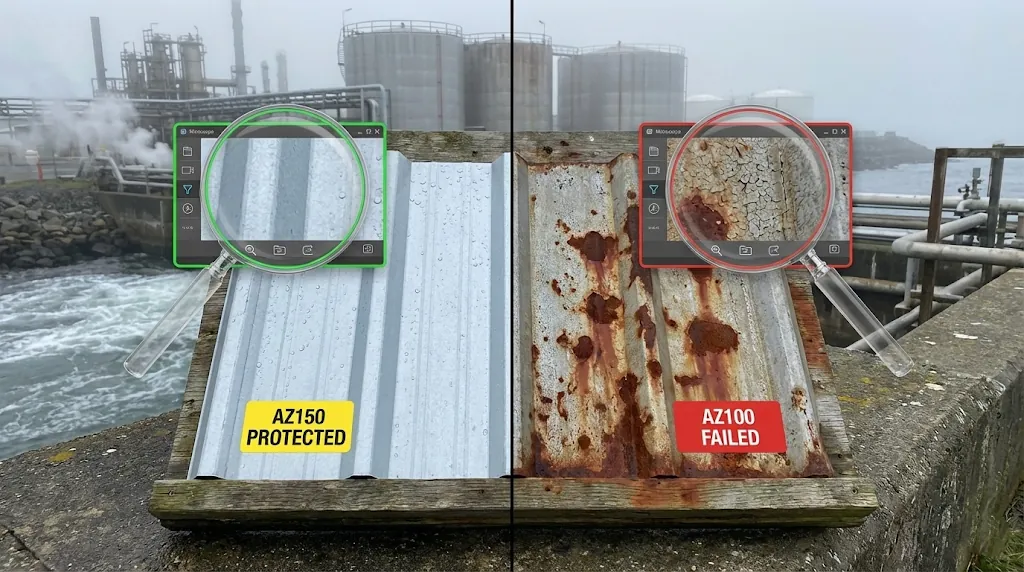
How Long is the Warranty for Warehouse Roofing Materials and Installation Services at PT. Bajaringan Industri Sejahtera?
How Long is the Warranty for Warehouse Roofing Materials and Installation Services at PT. Bajaringan Industri Sejahtera?…
The Importance of Roof Audits Using Drone Technology and Thermal Inspection to Detect Leaks and Structural Damage Before Major Losses Occur
Introduction The roof is a vital building component that often goes unnoticed until damage becomes severe. In fact, the …
Comparison of Klip-Lok vs Trimdek Roof Profiles for Warehouses and Factories: Advantages of the Concealed Clip System, Durability, Price, and Usage Recommendations
Introduction Roofing is a crucial component in the construction of warehouses and factories. Its function is not merely …
NEED A COST ESTIMATE FOR YOUR PROJECT?
Our surveyors come to the location for free written offers within 24 hours.