The Importance of Roof Audits Using Drone Technology and Thermal Inspection to Detect Leaks and Structural Damage Before Major Losses Occur
Introduction
The roof is a vital building component that often goes unnoticed until damage becomes severe. In fact, the roof serves as the primary protector of the structure from exposure to extreme weather, ultraviolet rays, acid rain, and continuous wind loads. In light steel roof construction, the integrity of connections, bolts, and protective coatings are crucial factors that determine the overall service life of the building. Unfortunately, conventional inspection methods that rely on manual examination are considered less efficient, high-risk, and often unable to reach hidden areas. This is where drone technology and thermal inspection come in as early detection solutions that are accurate, safe, and data-driven. This article discusses the importance of technology-based roof audits to prevent major losses, particularly in light steel roof construction, which is the primary expertise of PT. Bajaringan Industri Sejahtera.
Limitations of Conventional Roof Inspection Methods
For decades, roof inspections have been carried out by sending technicians up onto the structure to visually examine surface conditions. This method has several fundamental limitations:
- Occupational safety risks: Workers must climb onto the roof, prone to falls, especially on sloped roofs or tall buildings. Data from the International Labour Organization (ILO) shows that work at height accounts for about 20% of total fatal workplace accidents in the construction sector.
- Limited reach: Hidden areas, difficult corners, and gaps between connections are often not thoroughly inspected. In light steel roofs, the bolt connection points and truss supports are precisely the locations most prone to corrosion and cracking.
- Subjectivity of results: Findings depend on the inspector's vision and experience, so the potential for human error is considerable. Two different inspectors can produce inconsistent reports for the same roof condition.
- High operational costs: Requires scaffolding, additional labor, and long working time. For industrial buildings with large spans, the cost of renting scaffolding alone can reach tens of millions of rupiah per inspection.
These limitations create dangerous "blind spots": small damage such as hidden leaks or early corrosion in light steel often goes undetected until it develops into a serious structural problem.
Drone Technology as a High-Precision Visual Inspection Tool
Drones or Unmanned Aerial Vehicles (UAVs) have revolutionized the way roof inspections are conducted. With high-resolution cameras mounted on stabilized gimbals, drones are capable of producing detailed imagery down to millimeter level from a distance of several meters from the roof surface.
- High-resolution image capture: Drones can photograph details of connections, bolts, and light steel roof surfaces from various angles. The 20–48 MP cameras commonly used today can identify hairline cracks, scratches in coating layers, and even early signs of corrosion on self-drilling screws.
- Access to dangerous areas: Reaching points that are difficult for humans to reach without dismantling the structure. Areas behind parapets, chimneys, or HVAC units on the roof can be inspected easily.
- Time and cost efficiency: The inspection process is faster compared to manual methods, thus saving operational costs. Inspecting a 5,000 m² roof that usually takes 2–3 days with manual methods can be completed in 3–5 hours using a drone.
- Digital documentation: Photos and videos can be archived as a history of roof conditions for periodic maintenance. This data is also useful as a baseline for comparing roof conditions over time.
Thermal Inspection to Detect Hidden Leaks and Moisture
If drones provide sharp visual eyes, thermal cameras provide "vision" that can penetrate what is invisible to the human eye. Infrared thermography works by detecting heat radiation emitted by objects, then converting it into a temperature map.
- Temperature difference detection: Thermal cameras capture temperature anomalies that indicate water leaks or moisture beneath the roof layer. Water that seeps into insulation or ceilings will change the thermal characteristics of that area.
- Identification of vulnerable points: Areas with high moisture appear cooler due to evaporative cooling, so leak points can be mapped accurately. Temperature differences as small as 0.5°C can already be detected by modern thermal cameras with sensitivity ≤50 mK.
- Early detection of structural damage: Prolonged moisture can trigger corrosion in light steel, which is visible from abnormal temperature patterns. Corrosion in steel reduces local thermal conductivity, thus creating a distinctive thermal "signature."
- Non-destructive: No need to dismantle the roof to find the source of the problem. This is very important on light steel roofs with insulation layers or metal decks that are expensive to dismantle and reassemble.
International standards such as ASTM C1060 and ISO 18434-1 have established guidelines for building thermography implementation, including requirements for minimum temperature differences, weather conditions, and data interpretation procedures.
Benefits of Early Detection for PT. Bajaringan Industri Sejahtera and Its Clients
The implementation of drone and thermal-based roof audits is not merely technology adoption, but a strategic investment that provides layered benefits:
- Preventing major losses: Small repairs are far cheaper than replacing severely damaged roof structures. Replacing one sheet of leaking light steel roof may only cost hundreds of thousands of rupiah, while repairing a corroded truss can reach tens of millions of rupiah.
- Extending roof service life: Data-driven maintenance keeps light steel performance optimal. High-quality light steel with AZ150 (aluminium-zinc) coating has a service life of 20–25 years, but can drop drastically to 5–10 years if leaks are not addressed.
- Increasing client trust: Professional audit services become added value and differentiation in the market. Corporate clients and industrial building owners increasingly demand transparency and objective evidence of their asset conditions.
- Supporting warranty and insurance claims: Visual and thermal data become objective evidence of roof conditions. In claim disputes, dated and verified digital documentation is far stronger than manual reports.
Implementation of Drone and Thermal-Based Roof Audits at PT. Bajaringan Industri Sejahtera
As a company focused on light steel roof solutions, PT. Bajaringan Industri Sejahtera can implement this audit service through the following steps:
- Development of inspection SOP: Establishing routine schedules (e.g., every 6 months), priority areas (connections, supports, areas around penetrations), and criteria for evaluating results.
- Training of technical team: Drone operators and thermal analysts need certification and understanding of light steel construction. Certification from institutions such as the Infraspecton Institute or ITC (Infrared Training Center) is an added value.
- Equipment investment: Selection of drones and thermal cameras that suit the needs of the roof industry. Drones with IP43 rating and above and thermal cameras with a minimum resolution of 320×240 are recommended for professional work.
- Integration of digital reports: Audit results are presented in illustrated reports, thermal maps, and action recommendations. Cloud-based platforms allow clients to access audit history at any time.
- Maintenance follow-up: Every finding is immediately followed up with scheduled repairs, complete with priorities based on severity level.
Challenges and Solutions in Implementing This Technology
Although offering many advantages, the implementation of this technology is not without challenges:
- Initial investment cost: Can be overcome by renting equipment or partnering with inspection service providers. The "audit as a service" model also allows companies to offer services without having to own all the equipment.
- Drone flight regulations: Requires operating permits and compliance with local airspace rules, such as Minister of Transportation Regulation PM 37 of 2020 on the Operation of Unmanned Aircraft. In certain areas (airports, military zones, palaces), special permits are required.
- Need for skilled human resources: Continuous training and competency certification are required. Drone operators must have a Remote Pilot Competency Certificate from the Ministry of Transportation.
- Interpretation of thermal data: Requires experienced analysts so that results are not misinterpreted. Factors such as image capture time, air humidity, and material emissivity greatly affect reading accuracy.
Conclusion
Roof audits using drones and thermal inspection are strategic investments capable of detecting leaks and structural damage in light steel early, accurately, and safely. For PT. Bajaringan Industri Sejahtera, the implementation of this technology not only prevents major losses but also strengthens its reputation as a professional and innovative roof solution provider. With proper SOPs, trained teams, and neat integration of digital reports, this audit service can become a new standard in the light steel roof industry in Indonesia. Early detection today is far wiser than major repairs tomorrow.
References
- ASTM International. (2021). Standard Guide for Infrared Thermography for Building Diagnostics (ASTM C1060-11a).
- International Organization for Standardization. (2019). ISO 18434-1: Condition Monitoring and Diagnostics of Machines — Thermography.
- Ministry of Transportation of the Republic of Indonesia. (2020). Minister of Transportation Regulation Number PM 37 of 2020 on the Operation of Unmanned Aircraft.
- Indonesian Light Steel Association. (2022). Guidelines for Inspection and Maintenance of Light Steel Roofs.
- Infraspecton Institute. (2023). Building Envelope Thermography Certification Program.
- Journal articles and industry publications related to drone inspection and building thermography (2020–2024).
Dapatkan Update
Artikel terbaru, insight harga material, dan studi kasus proyek langsung ke WhatsApp Anda.
Artikel Terkait
Lihat Lainnya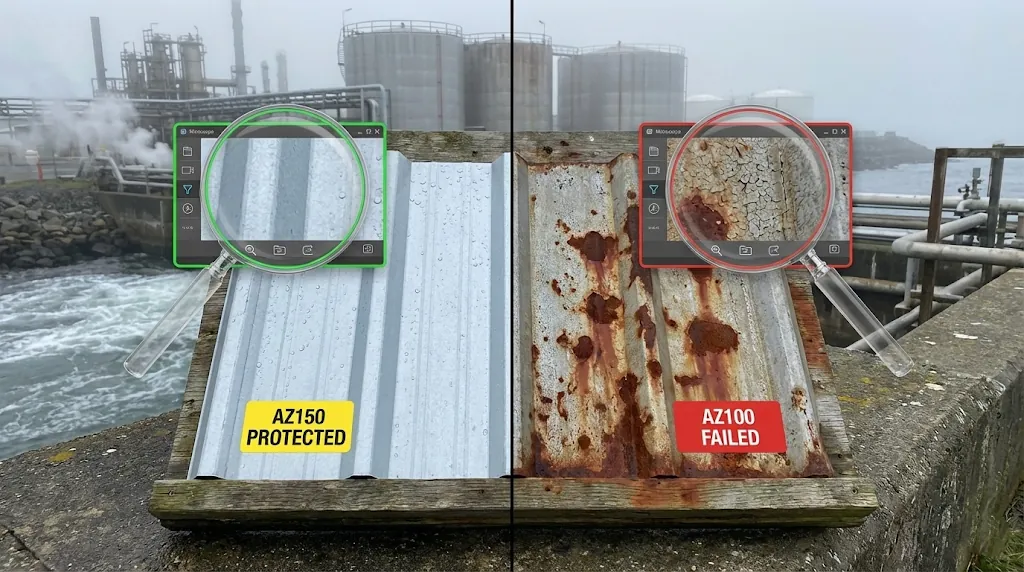
How Long is the Warranty for Warehouse Roofing Materials and Installation Services at PT. Bajaringan Industri Sejahtera?
How Long is the Warranty for Warehouse Roofing Materials and Installation Services at PT. Bajaringan Industri Sejahtera?…
Comparison of Klip-Lok vs Trimdek Roof Profiles for Warehouses and Factories: Advantages of the Concealed Clip System, Durability, Price, and Usage Recommendations
Introduction Roofing is a crucial component in the construction of warehouses and factories. Its function is not merely …
Building Industry Without Burden: Why Light Steel Roof Structures Are the Best Investment for Your Warehouse and Factory
Introduction In the warehouse and factory construction industry, space efficiency and structural strength are top priori…
NEED A COST ESTIMATE FOR YOUR PROJECT?
Our surveyors come to the location for free written offers within 24 hours.