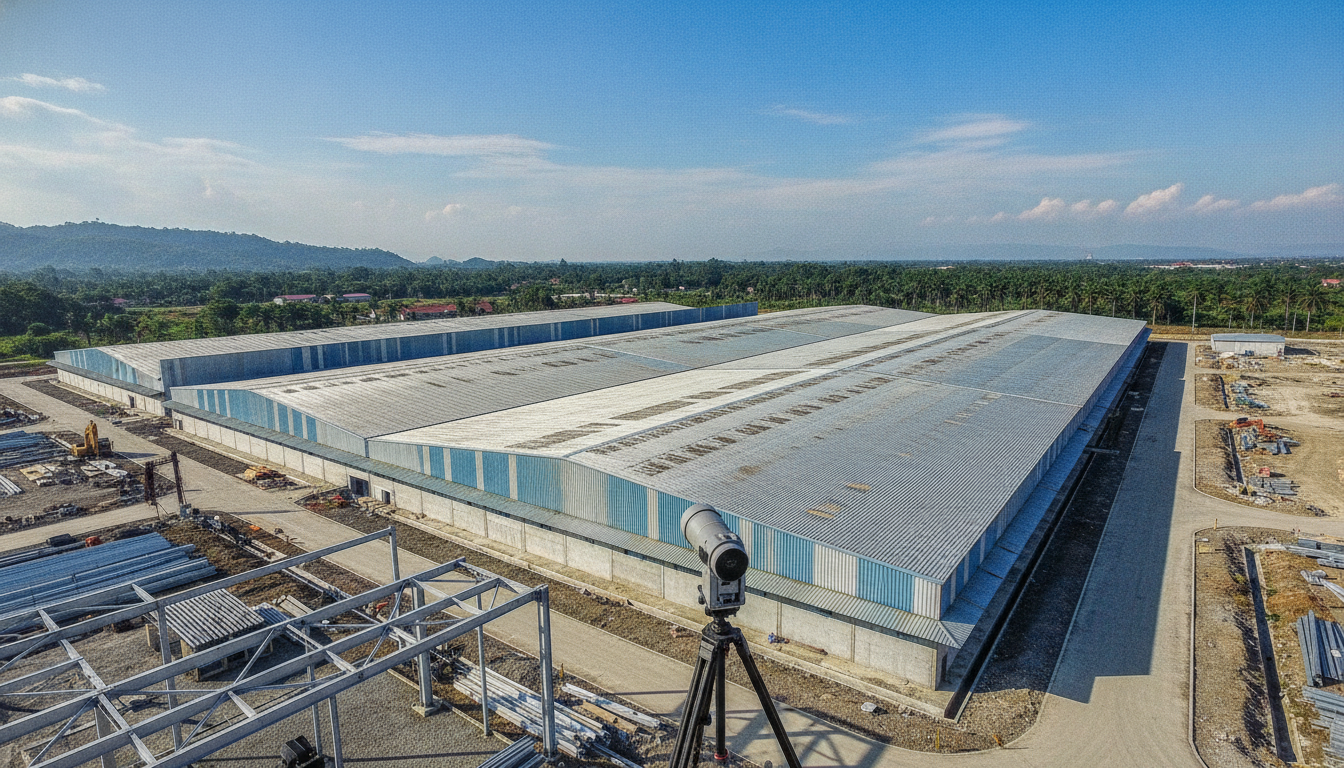
Peeking into Future Technology: How Thermal Drone Roof Audits Detect Leaks and Corrosion in Light Steel
Introduction
Maintenance of light steel roofs is often hampered by safety risks and the limitations of human visual range in identifying structural problems. Roof audit technology using thermal drones emerges as an innovative solution capable of detecting potential leaks and corrosion quickly, accurately, and safely. This article will thoroughly review how this technology works to maintain the integrity of your building.
At PT. Bajaringan Industri Sejahtera, we have integrated this technology into our inspection services to provide more precise results for clients. With over a decade of experience in the light steel industry, we understand that early detection is key to preventing costly structural damage.
Basic Principles of Infrared Thermography on Drones
How Thermal Cameras Work
Drones used in roof audits are equipped with infrared sensors capable of capturing heat radiation (temperature) from the roof surface. Unlike ordinary visual cameras that only capture visible light, thermal cameras detect infrared energy emitted by objects. These sensors typically have a thermal resolution between 160x120 to 640x480 pixels, with temperature sensitivity down to 0.05°C.
Temperature Difference (Delta T)
Leaks or corrosion usually produce significant temperature differences compared to healthy roof areas. Moist areas tend to be cooler because water retains heat longer, while metal corrosion can emit different heat due to changes in thermal conductivity. The minimum detectable Delta T (temperature difference) is around 0.1°C, enabling identification of even the smallest anomalies.
Color Visualization
Advanced software converts temperature data into color maps (thermograms) to facilitate anomaly identification. Red typically indicates hot areas, while blue indicates cold areas. In the context of light steel roofs, dark blue areas often indicate water leaks, while bright red areas may indicate corrosion or structural weakness.
Water Intrusion Detection
Hidden Moisture Detection
Water that seeps into insulation or gaps in light steel retains heat longer, appearing as "dark spots" on thermal images. This technology can detect hidden moisture up to 5 cm below the roof surface, long before visual signs appear.
Water Path Mapping
By analyzing water spread patterns, our team can find the initial point of leakage, not just the drip point on the ceiling. For example, a leak at a roof bolt may appear as a water path flowing to another area, which can be accurately mapped using thermal analysis software.
Early Detection Before Severe Damage
Early detection prevents decay of supporting materials or mold growth caused by undetected leaks. According to our internal data, 70% of light steel roof damage can be prevented with routine thermal inspections every 6 months.
Corrosion and Structural Weakness Detection in Light Steel
Heat Anomalies in Metal
The corrosion process (oxidation) can produce micro heat or change the thermal conductivity of metal, which can be detected by drone sensors. Corroded light steel typically shows temperatures 1-2°C higher than healthy areas due to exothermic reactions.
Coating Delamination Identification
We detect areas where the protective coating of light steel has peeled or failed, becoming an entry point for corrosion. Coating delamination often appears as irregular patterns on thermograms, with temperature differences of 0.5-1°C from surrounding areas.
Moisture Analysis at Joints
Joint points (bolts/screws) are often the initial location of corrosion due to water accumulation. Our drones inspect every joint with high precision, identifying areas requiring immediate attention.
Advantages of Thermal Drone Method Compared to Manual Inspection
Work Safety (Safety First)
This method eliminates the risk of workers falling from heights, especially on steep-sloped roofs or tall structures. At PT. Bajaringan Industri Sejahtera, we prioritize safety by reducing the need for workers to access roofs directly.
Time and Cost Efficiency
Drones can scan large roof areas (e.g., warehouses or factories) in minutes, far faster than manual inspection. For example, a 1,000 m² roof can be scanned in 15-20 minutes, compared to 2-3 hours for manual inspection.
Data Accuracy and Documentation
We produce objective digital reports, complete with coordinates of problem locations, which can be compared over time (periodic monitoring). This data is stored in our system for trend analysis and maintenance needs prediction.
Roof Audit Procedure Using Thermal Drone at PT. Bajaringan Industri Sejahtera
Preparation and Planning
We determine the best time (usually afternoon or night when temperature differences are optimal) and conduct weather checks. Wind speed must be below 15 km/h to ensure drone stability.
Flight and Data Collection
Drones fly in systematic grid patterns to ensure all areas are covered without omission. We use drones with high-resolution thermal cameras (640x480) and visual sensors for additional documentation.
Data Analysis and Reporting
Our expert team analyzes thermograms to distinguish between actual leaks, shadows, or heat reflections, then compiles repair recommendations. Reports include thermal maps, visual photos, and action recommendations with priority based on severity level.
Repair Follow-up
We provide specific recommendations for repair or replacement of affected light steel components, including cost and time estimates. Our after-sales service ensures repairs are performed to the highest quality standards.
Conclusion
Roof audits using thermal drones represent an important breakthrough in the building maintenance industry, especially for light steel structures. By combining thermal technology and proper data analysis, PT. Bajaringan Industri Sejahtera can help clients detect leak and corrosion problems precisely before they become costly structural damage. Investment in this technology is a strategic step to ensure the longevity and safety of your building's roof.
References
- American Society for Nondestructive Testing (ASNT). (2021). Infrared and Thermal Testing Handbook.
- International Organization for Standardization (ISO). (2018). ISO 18434-1: Condition monitoring and diagnostics of machines — Thermography.
- National Roofing Contractors Association (NRCA). (2022). Roof Inspection and Maintenance Manual.
- Internal Article of PT. Bajaringan Industri Sejahtera. (2023). Standard Operating Procedure for Light Steel Roof Inspection.
Dapatkan Update
Artikel terbaru, insight harga material, dan studi kasus proyek langsung ke WhatsApp Anda.
Artikel Terkait
Lihat Lainnya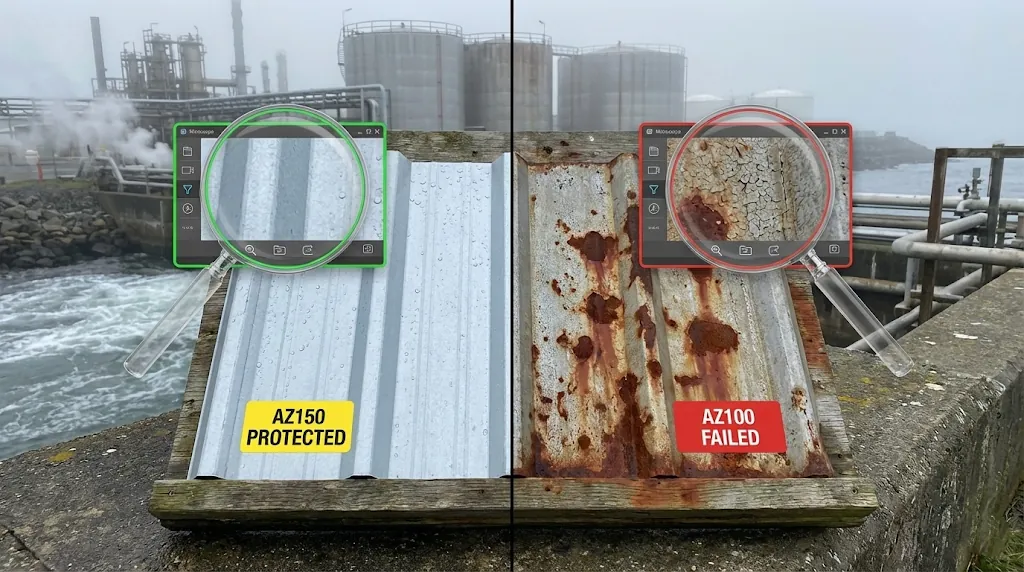
Complete Guide to Light Steel Roof Maintenance for Warehouses and Factories to Prevent Leaks and Corrosion
Introduction Light steel roofs are a vital component of warehouse and factory buildings as they function to protect asse…
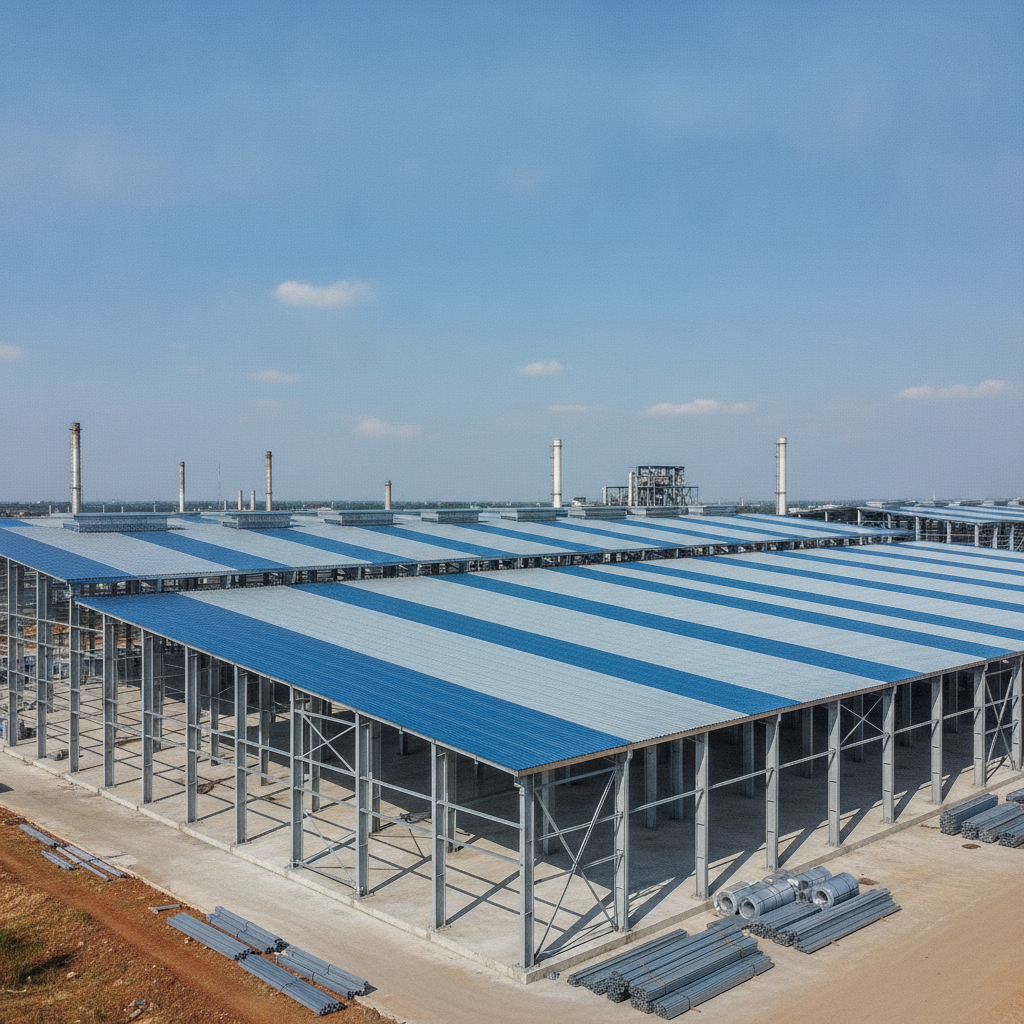
How Much Light Steel and Spandek Are Needed for a 1,500 m² Warehouse? A Complete Calculation Guide
Berapa Kebutuhan Baja Ringan dan Spandek untuk Gudang Seluas 1.500 m²? Panduan Lengkap Menghitungnya\n\n Pendahuluan\n\n…
essential-legal-documents-for-light-steel-roof-contractors-before-signing-a-contract
Introduction Choosing a light steel roof contractor is a strategic decision that affects the safety, durability, and lon…
NEED A COST ESTIMATE FOR YOUR PROJECT?
Our surveyors come to the location for free written offers within 24 hours.